Sometimes the bag is filled with herbs. Mint, basil, dill, oregano, and rosemary can grow with surprising intensity once established. A single plant can overwhelm a kitchen if harvested all at once, so sharing becomes the easiest solution. Fresh herbs are too valuable to discard, yet too potent to consume alone in large quantities.
Another possibility is that the food holds cultural significance. Many households grow or buy ingredients central to their own cooking traditions but unfamiliar to others nearby. What feels mysterious to one person may be an everyday staple to someone else. Bitter greens, unusual root vegetables, seed pods, or small fruits often fall into this category. Sharing them—intentionally or not—can be an invitation into another culinary world.
Mystery Gift Solved
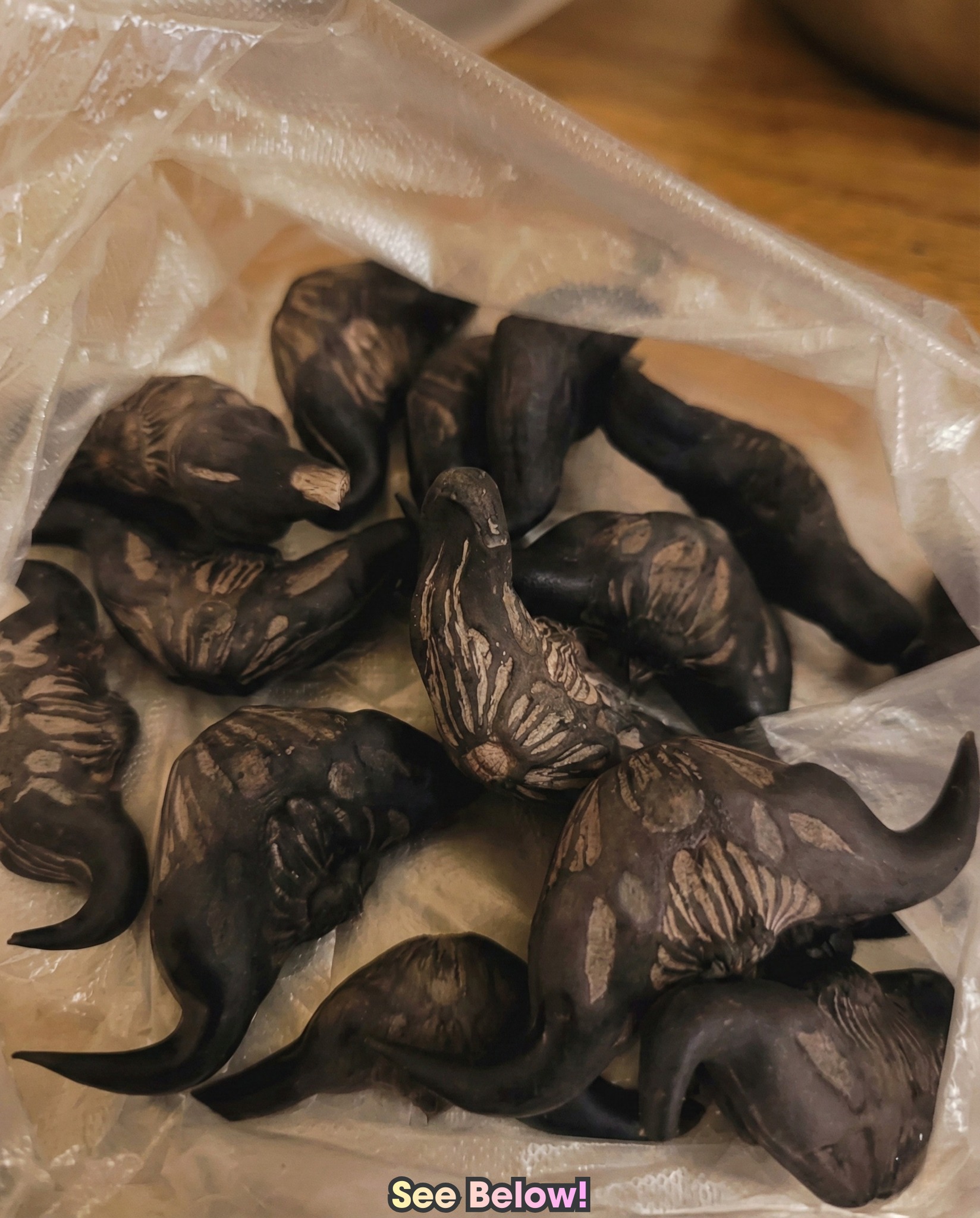
These are water caltrops, also known as bat nuts, buffalo nuts, devil pods, or singhara nuts. They’re the edible seeds—often referred to as fruits—of an aquatic plant that grows in calm, freshwater environments such as ponds and lakes.
At first glance, water caltrops look a little intimidating. Their pods have a hard, dark shell with horn-like points, but inside is a single white, starchy seed. Despite their tough exterior, the interior is completely edible once properly cooked.
Water caltrops are commonly used in Asian cuisine, where they’re valued for both their flavor and texture. They must be cooked before eating, most often by boiling for 20 to 30 minutes until the shell can be cracked open and the seed inside becomes tender.
