Dehydration is another key factor. Many people go hours without drinking enough water, replacing it with soda, coffee, or sugary drinks. The kidneys need water to filter properly. When they don’t receive enough, the concentration of waste products increases, and so does the risk of damage.
High blood pressure is one of the most common causes of kidney damage. The tricky part is that hypertension doesn’t always produce clear symptoms. It can be present for years without any obvious discomfort, while slowly damaging the delicate blood vessels of the kidneys. By the time kidney problems are detected, the high blood pressure has often already been causing significant damage.
Something similar happens with high blood sugar levels. Poorly controlled diabetes directly affects the kidneys’ ability to filter properly. Excess glucose damages the small internal filters, causing substances that should remain in the body to be lost through urine.
The most worrying thing is that the early stages of kidney damage are often silent. There is no pain, no clear signs. At most, you might experience fatigue, mild swelling in your feet or ankles, changes in your urine, or a general feeling of malaise that is easily mistaken for stress or lack of sleep.
Over time, if the underlying cause is not addressed, the damage progresses. The kidneys lose their filtering capacity, toxins accumulate in the body, and more noticeable symptoms begin to appear: significant swelling, extreme fatigue, difficulty concentrating, major changes in urine, and blood pressure problems that are difficult to control.
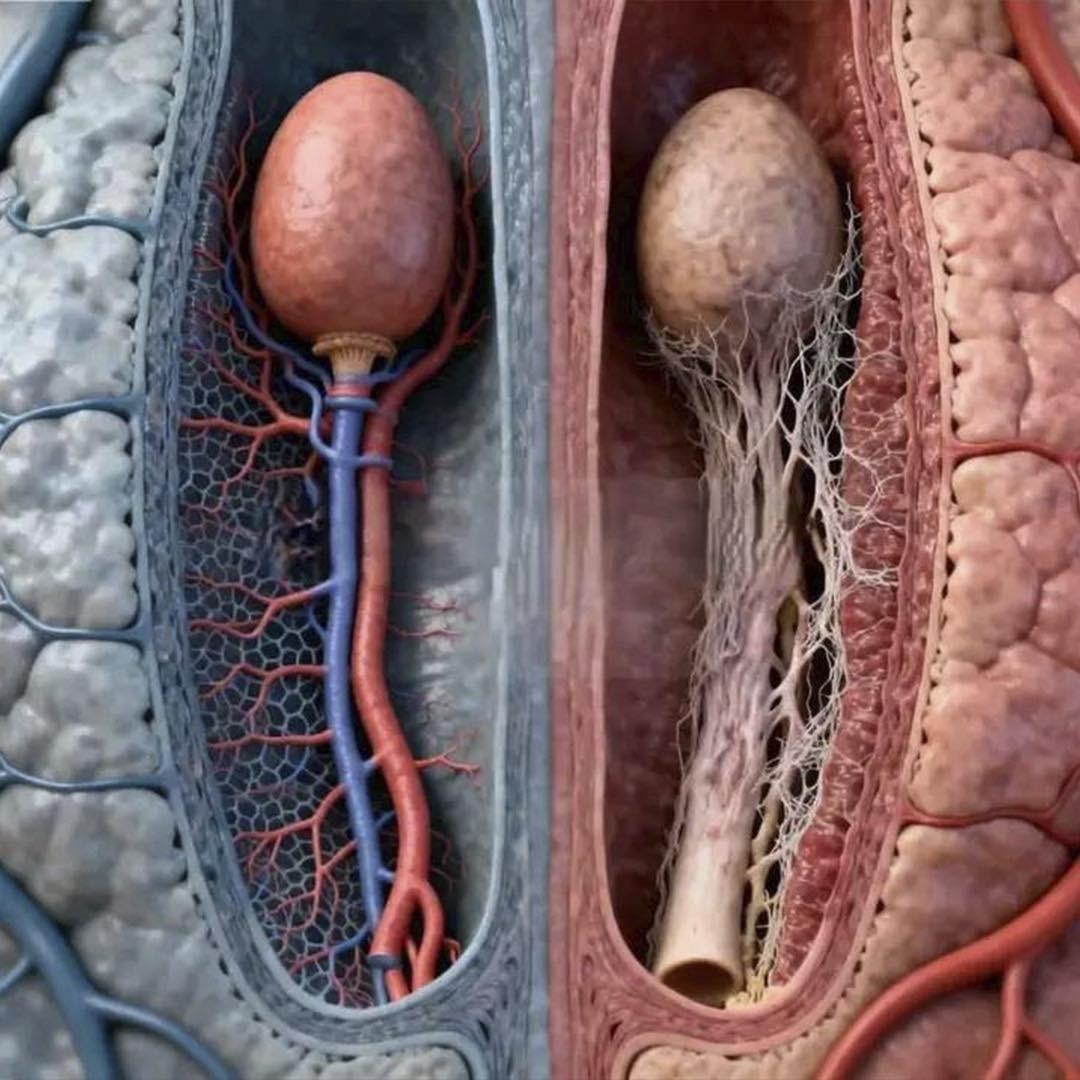
Comparative images often show one kidney with healthy blood vessels versus another with collapsed or damaged structures. This represents years of accumulated habits, not a problem that appears overnight. That’s why prevention is just as important as treatment.
One of the most common misconceptions is that only older people have kidney problems. The reality is that more and more cases are being detected in young adults, and even in seemingly healthy individuals. Sedentary lifestyles, poor diet, and the excessive use of certain medications without medical supervision are taking their toll.
The overuse of painkillers is another sensitive issue. Many people take pain medication frequently, without considering that some of them, when used excessively, can damage the kidneys. What starts as a quick fix can become a serious long-term problem
