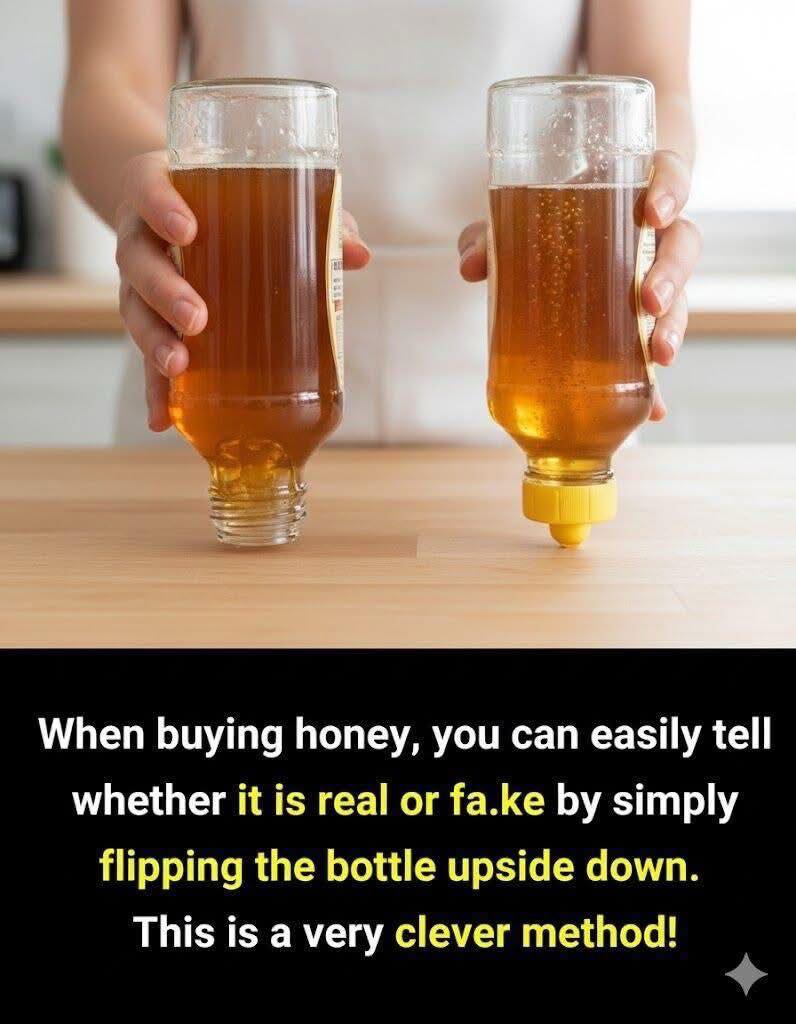
When shopping for natural products, it is important to know exactly what you are putting in your body. Honey is often called “liquid gold,” but because it is so popular, there are many products on the shelf that are not pure. You may have seen various videos online claiming there is an easy way to spot the difference just by looking at the packaging.
The Popular “Bottle Flip” Method
There is a very common piece of advice circulating on social media and health blogs. It usually goes something like this: “Turn the honey bottle upside down—if it bubbles slowly or barely moves, it’s real. If it flows fast like water, it’s fake.”
It sounds like a great life hack because it is quick and requires no extra tools. However, while it is based on some truth about how thick honey should be, relying on this alone can be a mistake.
What the “Bottle Flip” Test Claims
The idea behind this test is based on density and thickness.
The Theory for Real Honey: Supporters of this test believe that because pure honey is naturally thick, it should move like a heavy syrup. When you turn the jar over, a single, large air bubble should rise slowly to the top.
The Theory for Fake Honey: People assume that if honey has been diluted with things like corn syrup or sugar water, it will be much thinner. In these cases, they claim the liquid will flow quickly, almost like juice.
Why This Trick Can Mislead You
Even though it sounds logical, the physics of honey is a bit more complicated. Here are several reasons why the flip test might give you the wrong answer.
