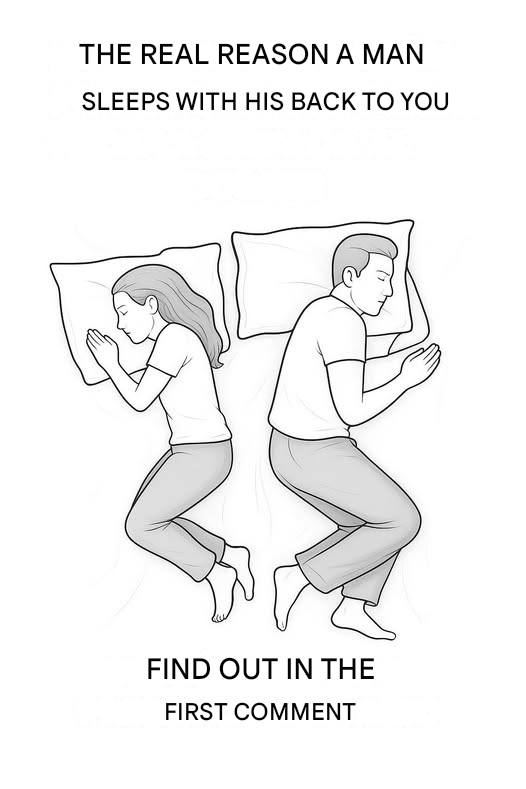
A shared bed can be a silent reflection of the relationship. Gestures during sleep, although unconscious, often reveal hidden emotions and couple dynamics that are not always expressed in words. One of the most common, and also most confusing, postures is when a man sleeps with his back to you.
Coldness? Emotional distance? Independence? The truth could be much more complex and even comforting than you imagine.
Although many might interpret this posture as a sign of tension or emotional disconnection, in reality this is not always the case. Turning your back when sleeping can have several meanings, from psychological aspects to simply personal preferences for comfort.
Emotional independence
Turning your back on your partner can reflect a confident and independent personality. It indicates that there is enough confidence that they do not need constant physical contact to feel connected. It is a comfortable form of rest without negative implications.
Physical need for space
Many times, sleeping on your back has no emotional charge whatsoever. It can be a matter of temperature, posture or even body ailments. Some people simply find this position the most relaxing to fall asleep.
A balanced relationship
Surprisingly, studies on body language during sleep reveal that couples who turn their backs to each other, but touch each other (such as feet or lower back), have more stable and mature relationships. It is a balance between intimacy and autonomy.
