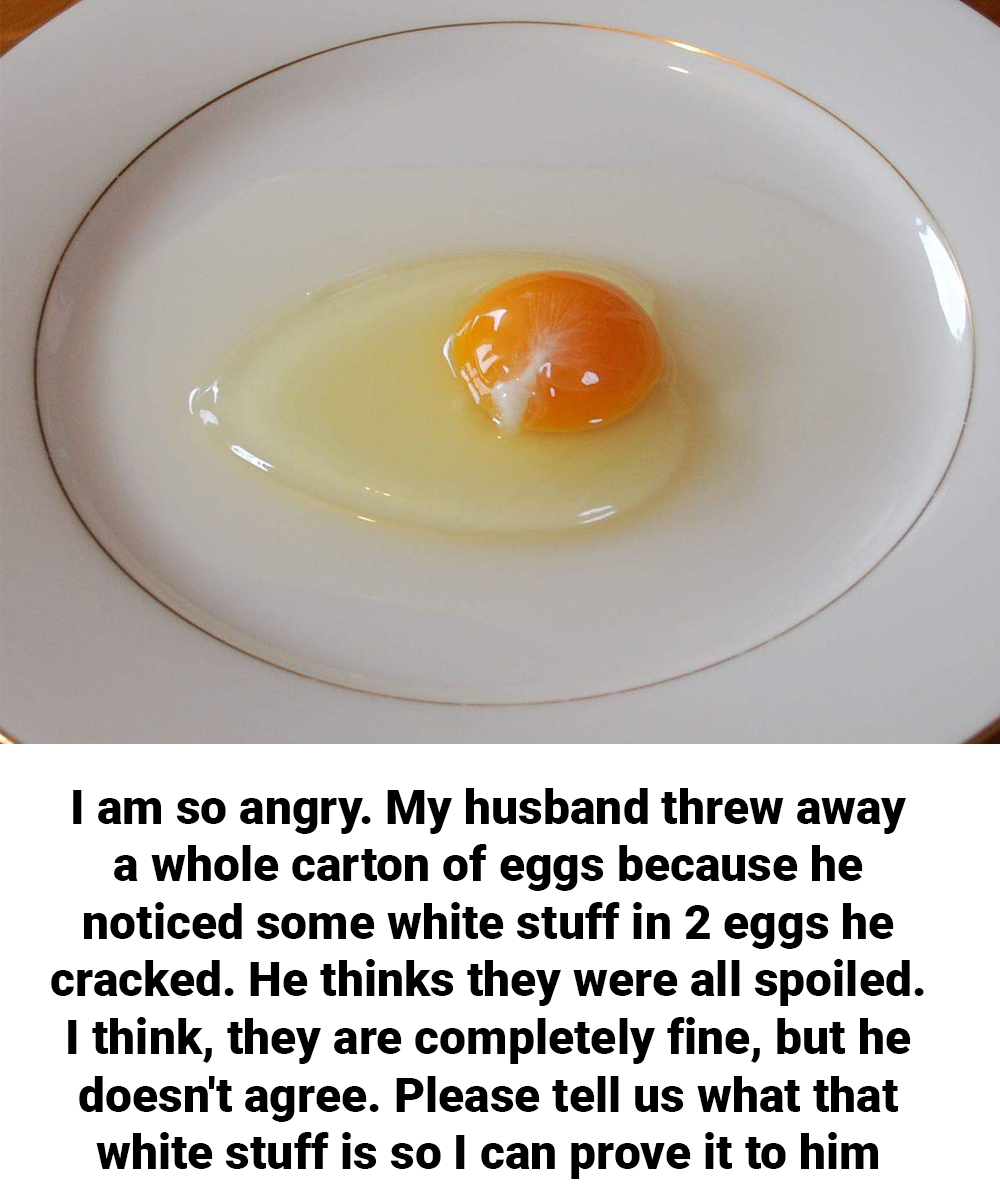
What the Chalaza Says About Freshness
The appearance of the chalaza can actually tell you something about the egg’s quality. In fresh eggs, it looks thicker, firmer, and more rope-like. As eggs age, the chalaza gradually thins and becomes less noticeable.
So if you spot a well-defined white strand, it’s usually a good sign that the egg is fresh and properly stored.
Is It Safe to Eat?
Yes—completely. The chalaza is made of the same proteins found in egg whites, making it perfectly safe to consume. During cooking—whether you’re frying, scrambling, or baking—it blends in and essentially disappears.
There’s no need to remove it unless you’re preparing dishes that require an ultra-smooth texture, such as custards, puddings, or delicate sauces. Otherwise, it won’t affect taste, texture, or quality.
A Small Detail with a Reassuring Meaning
Understanding what the chalaza is can make cooking feel more confident and stress-free. What might look like an odd flaw is actually a clever natural design that protects the egg.
So the next time you see that white strand, you’ll know it’s not a defect—it’s a quiet sign of freshness and nature doing its job perfectly.
