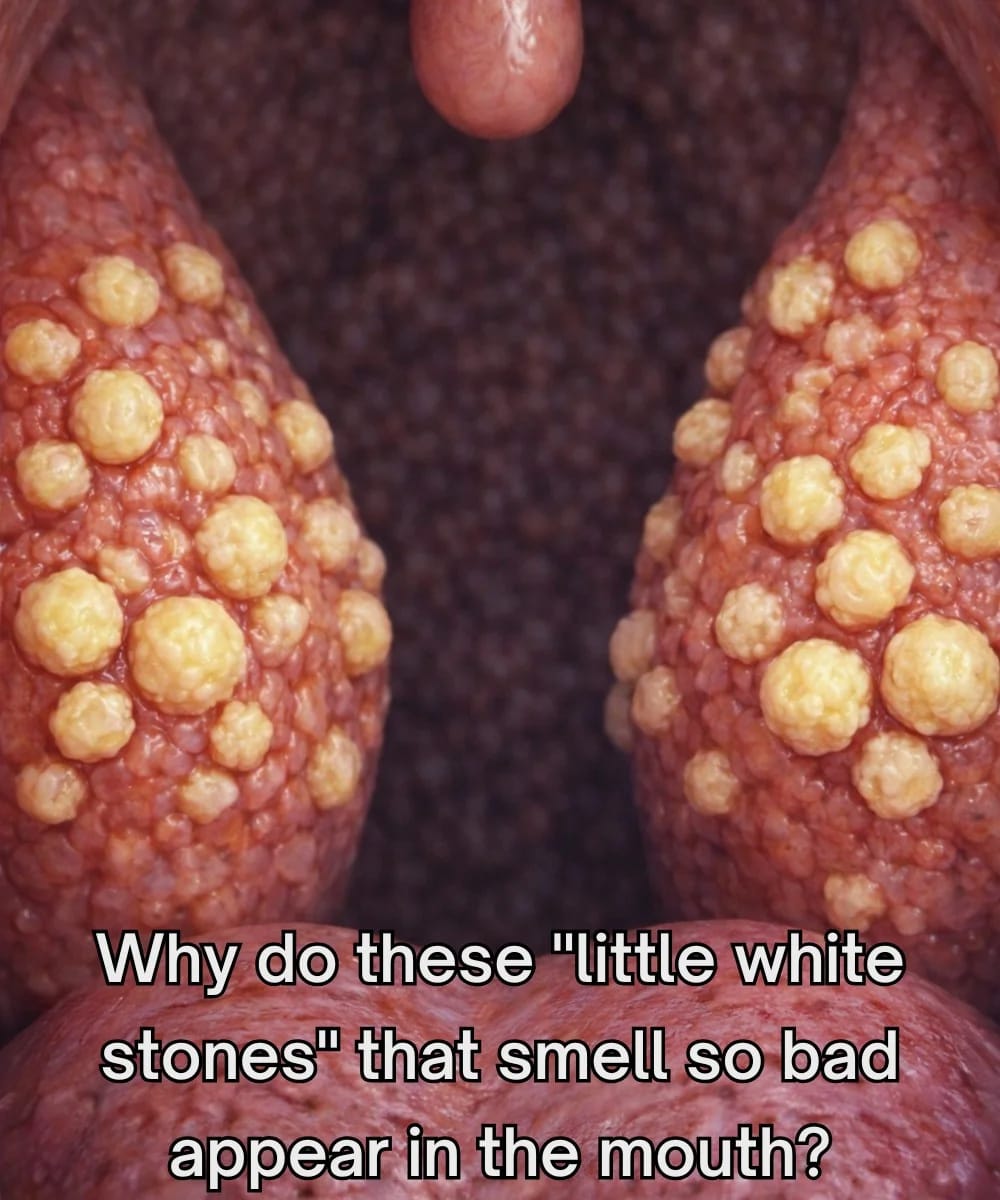
You’re brushing your teeth religiously, using mouthwash twice a day, yet that stubborn bad breath just won’t go away. Then one day you cough — and out pops a tiny, hard, foul-smelling white ball. It’s shocking, embarrassing, and you instantly wonder: “What on earth was that thing?” You’re not alone — millions of people deal with these annoying little “stones” without ever knowing their name or how to stop them for good.
The worst part? They silently build up in the back of your throat, feeding bacteria that create an odor strong enough to make you self-conscious every time you open your mouth. But here’s the good news: once you understand exactly what they are and why they keep coming back, getting rid of them (and the bad breath) becomes surprisingly simple. Keep reading — because by the end of this article you’ll discover a few little-known tricks that most people never hear about… even from their dentist.
What Exactly Are Tonsil Stones (Tonsilloliths)?
Tonsil stones, also called tonsilloliths, are small, hard, yellowish-white calcified lumps that form in the crevices (crypts) of your tonsils. They’re made of food particles, dead cells, mucus, and bacteria that get trapped and then harden due to calcium buildup from saliva.
Research published in the journal Otolaryngology–Head and Neck Surgery shows that up to 10% of people develop visible tonsil stones at some point, though many more have tiny ones they never notice. The rotten-egg smell comes from anaerobic bacteria breaking down the trapped debris — the same bacteria linked to chronic bad breath (halitosis).
The bigger or deeper your tonsil crypts are, the more likely you are to get them. That’s why some people cough them up weekly while others go years without a single one.
