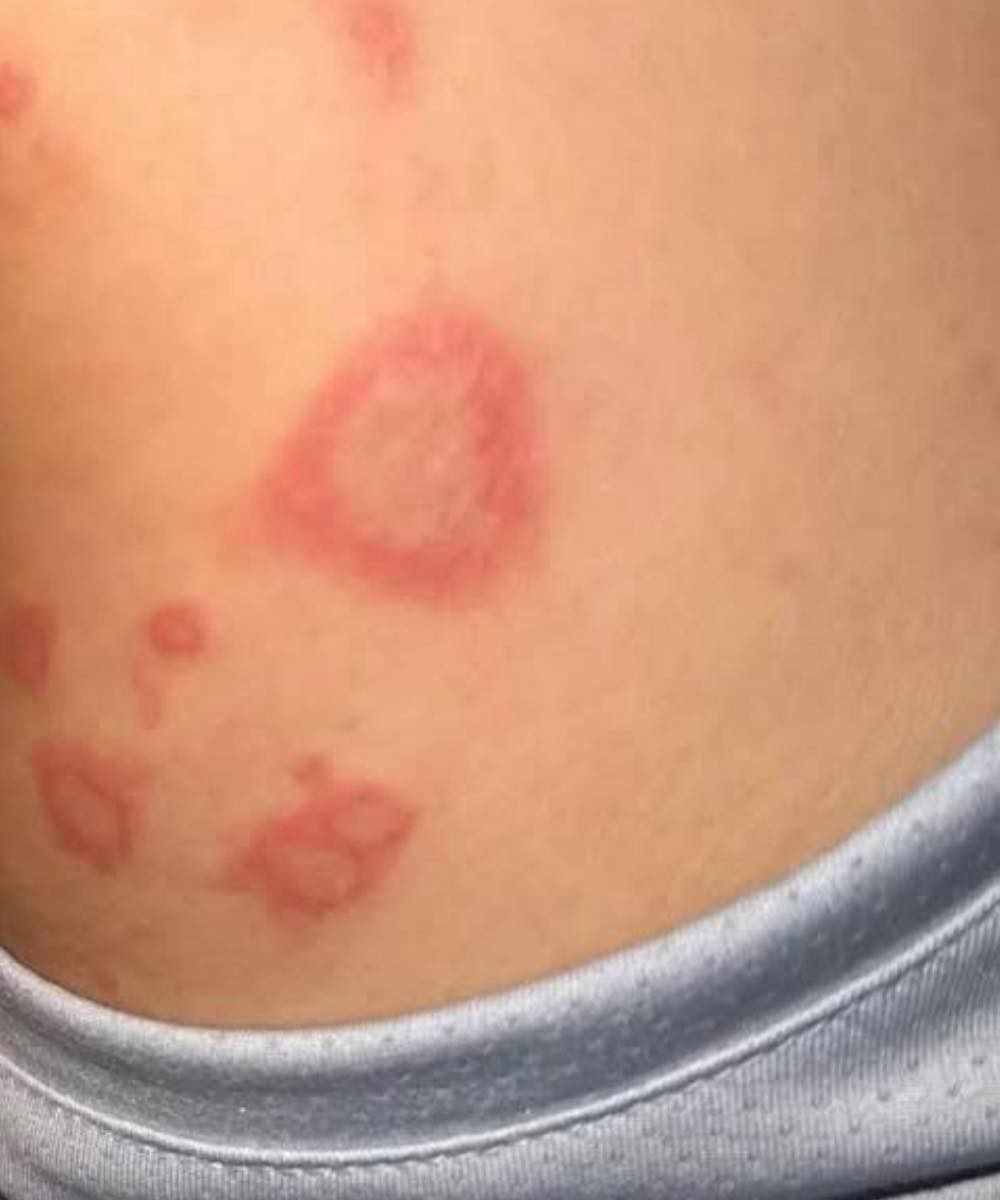
My 15 year old son been at his Nanny house for the weekend and he came back home with different sizes of bumps ..
- Red or pink circular patches
- Slightly raised or scaly borders
- Clearer skin in the center
- Mild itching or irritation
- Fungal rashes often spread slowly and may worsen if treated incorrectly with steroid creams instead of antifungal products.
When It’s Not a Fungus
Not all circular rashes are fungal. Doctors point out several other possibilities:
Eczema (nummular eczema)
This condition can cause coin-shaped red patches that are dry, itchy, and inflamed. Unlike fungal rashes, these usually lack a sharply defined border.
Psoriasis
Certain forms of psoriasis can create round, red plaques with silvery scaling. These patches are often chronic and may appear on multiple parts of the body.
Allergic or contact reactions
Exposure to irritants, soaps, detergents, or fabrics can sometimes cause round patches, especially in areas with friction or sweat.
The Role of Heat, Moisture, and Friction
Skin specialists note that environmental factors play a major role in many rashes. Hot weather, tight clothing, prolonged sitting, and sweating can weaken the skin’s barrier. This makes it easier for fungi, bacteria, or inflammation to take hold.
That’s why circular rashes often appear in areas that stay covered or damp for long periods.
When Circular Patches May Need Medical Attention

While many rashes are mild, doctors recommend seeing a healthcare provider if:
- The rash spreads rapidly
- It becomes painful, oozes, or cracks
- Home treatments don’t help after 1–2 weeks
- You have diabetes or a weakened immune system
- A proper diagnosis ensures the right treatment and prevents the rash from worsening or recurring.
