Dr. Patricia arrived promptly at 3:00 p.m. She was a 50-year-old woman with over 20 years of experience in child psychology. Carlos greeted her in the living room. “How are you, Valentina, Doctor?” he asked. “That’s why I’m here.” In the sessions, she’s showing remarkable progress, but I want to understand the environment that’s contributing to this improvement.
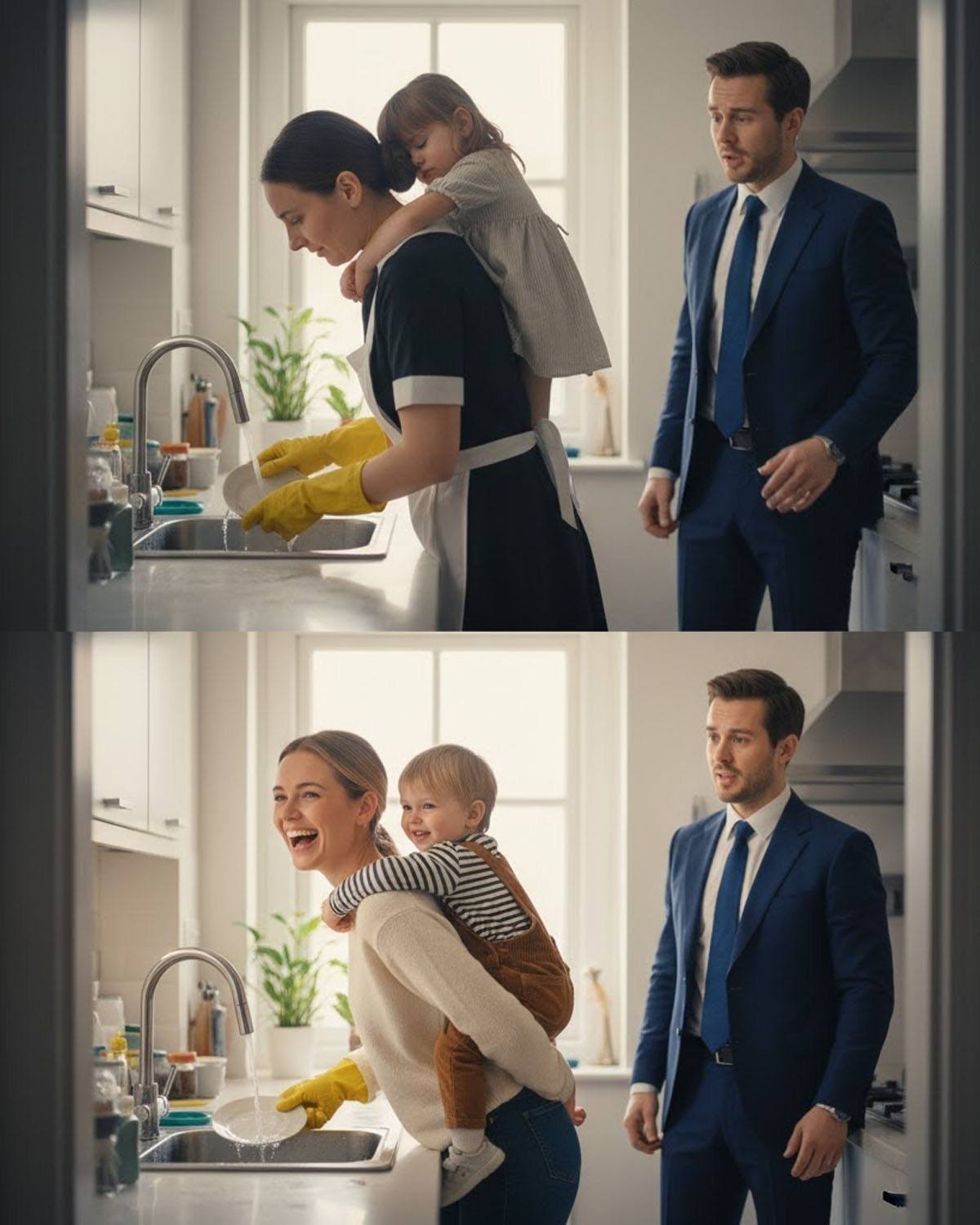
They were interrupted by laughter coming from the kitchen. Dolores appeared in the room with a disapproving look. “Mr. Carlos, Carmen is making a mess in the kitchen with the girl again.” “Leave them alone,” said Carlos. “Doctor, would you like to see how my daughter is interacting?” They walked discreetly to the kitchen.
The scene they witnessed impressed the psychologist. Valentina was standing on a stable stool, helping Carmen make cookies. The two were chatting animatedly about geometric shapes as they molded the dough. “This one is round like the sun,” Valentina said, showing a cookie.
“Very good, and what shape is this one?” asked Carmen. “Square like my bedroom window.” “Perfect, you’re very clever, princess.” Dr. Patricia observed the interaction for almost 15 minutes. Valentina was relaxed, communicative, demonstrating knowledge of shapes, colors, and measurements. More importantly, she displayed self-confidence.
