And Eve—my daughter-in-law—was kindness itself at first. She brought me tea without asking. She cooked dinner every night and wouldn’t let me lift a finger.
“You’ve been through enough, Lucy,” she would say. “Let me handle things.”
Those first weeks were peaceful. I felt safe there. Wrapped in warmth.
Then the balance began to shift.
It started small.
“Could you load the dishwasher while I finish this episode?”
“Lucy, would you mind folding the laundry? I’ve got a headache.”
Of course I didn’t mind. I was living in their home. Helping felt natural.
But slowly, the requests multiplied.
Soon I was cooking every meal. Cleaning every surface. Running every errand. Organizing their schedules. Scrubbing bathrooms. Dusting shelves.
I stopped feeling like a guest.
I started feeling like staff.
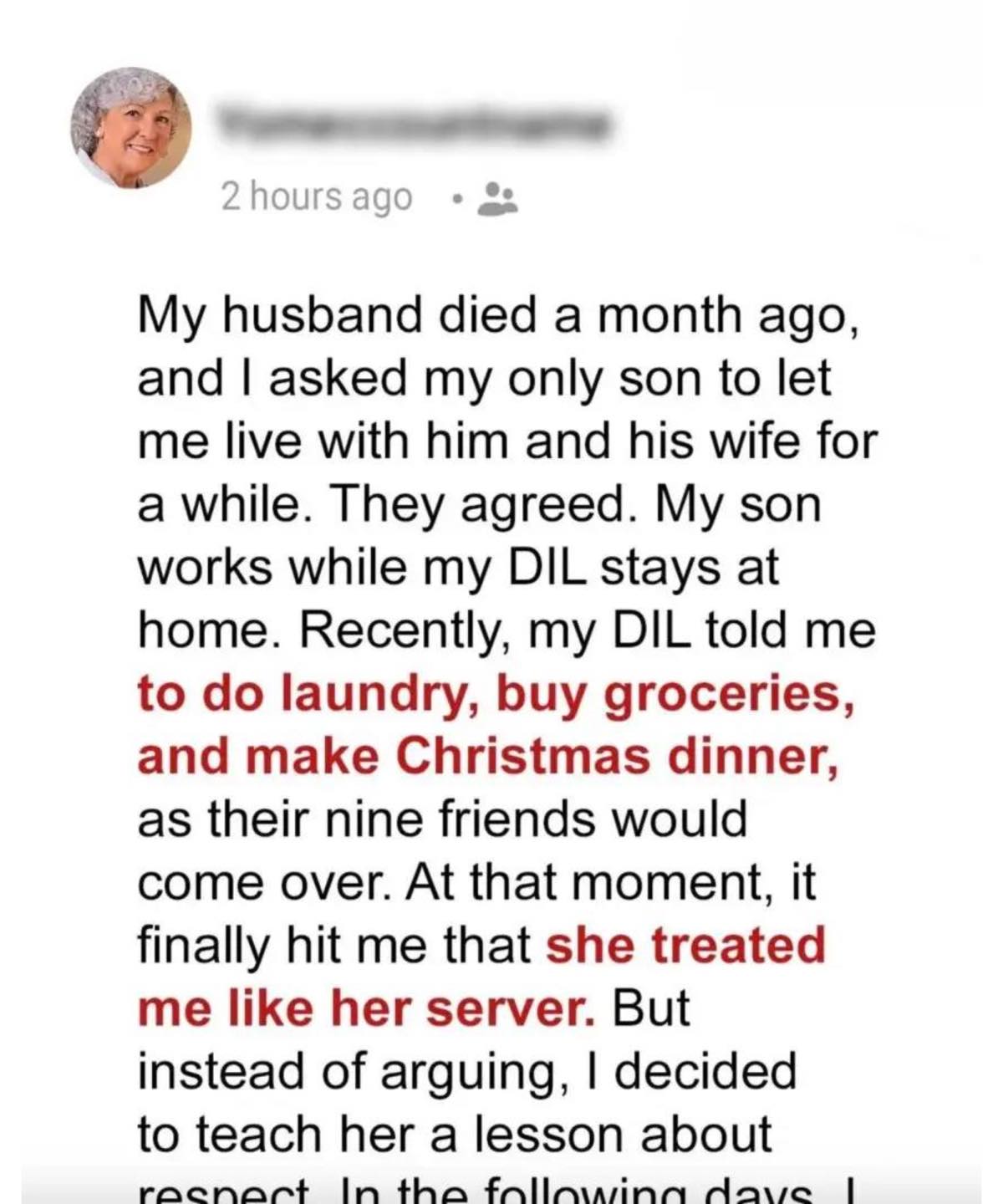
A few days before Christmas, I was folding towels when Eve called out from the couch, laughing at a movie.
“Lucy, after that can you run to the store? We need groceries for tonight and Christmas dinner. Nine people are coming, so make sure there’s plenty. I’ll leave money on the counter.”
I froze.
Nine guests. Full holiday meal. No discussion. No planning together. Just an assignment.
Something inside me tightened.
I had tried so hard not to overstay my welcome, not to be a burden. But somehow I had become the default solution to everything.
I didn’t want a confrontation. Not days before Christmas.
But I also knew I needed to remind her who I was.
Christmas dinners in my family were legendary. We never did anything halfway. I knew how to host. I knew how to feed a crowd. And if I was going to cook for nine people, I would do it on my own terms.
