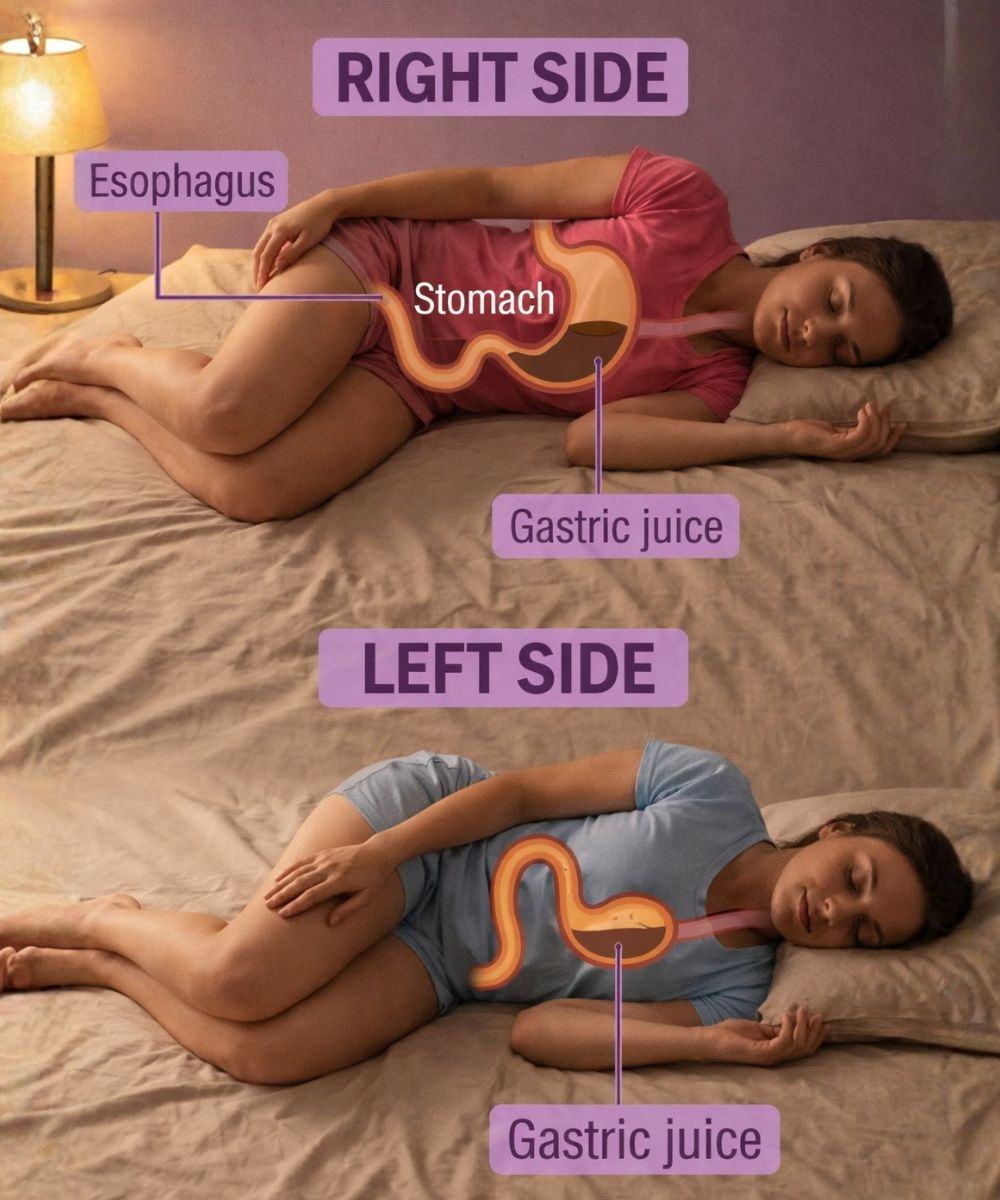
For many people, sleeping on the right side can reduce snoring compared to sleeping on the back, but it may worsen snoring compared to sleeping on the left side—especially in certain individuals.
Here’s why:
Side sleeping prevents the tongue from falling straight back into the throat. This alone often decreases snoring intensity. From this perspective, the right side is usually better than sleeping on your back.
However, some studies and sleep specialists note that the left side may keep the airway slightly more stable for certain people, particularly those with sleep apnea or reflux-related snoring.

Acid reflux is a major contributor to snoring. When stomach acid moves upward, it can irritate the throat and airway, causing inflammation and narrowing that worsen snoring.
Sleeping on the right side can increase acid reflux, because of how the stomach and esophagus are positioned. Increased reflux can lead to more throat irritation overnight, which may make snoring worse—especially in people who already have GERD.
In contrast, sleeping on the left side has been shown to reduce reflux, which is why doctors often recommend it for people who snore due to acid reflux.
Some people notice that nasal congestion shifts depending on which side they lie on. Sleeping on the right side may increase congestion in the right nasal passage due to gravity and blood flow changes. If your snoring is driven by nasal blockage rather than throat collapse, this can make snoring worse.
When right-side sleeping may help snoring
Sleeping on the right side may be beneficial if:
In these cases, right-side sleeping is often a reasonable compromise and may significantly reduce snoring compared to back sleeping.
