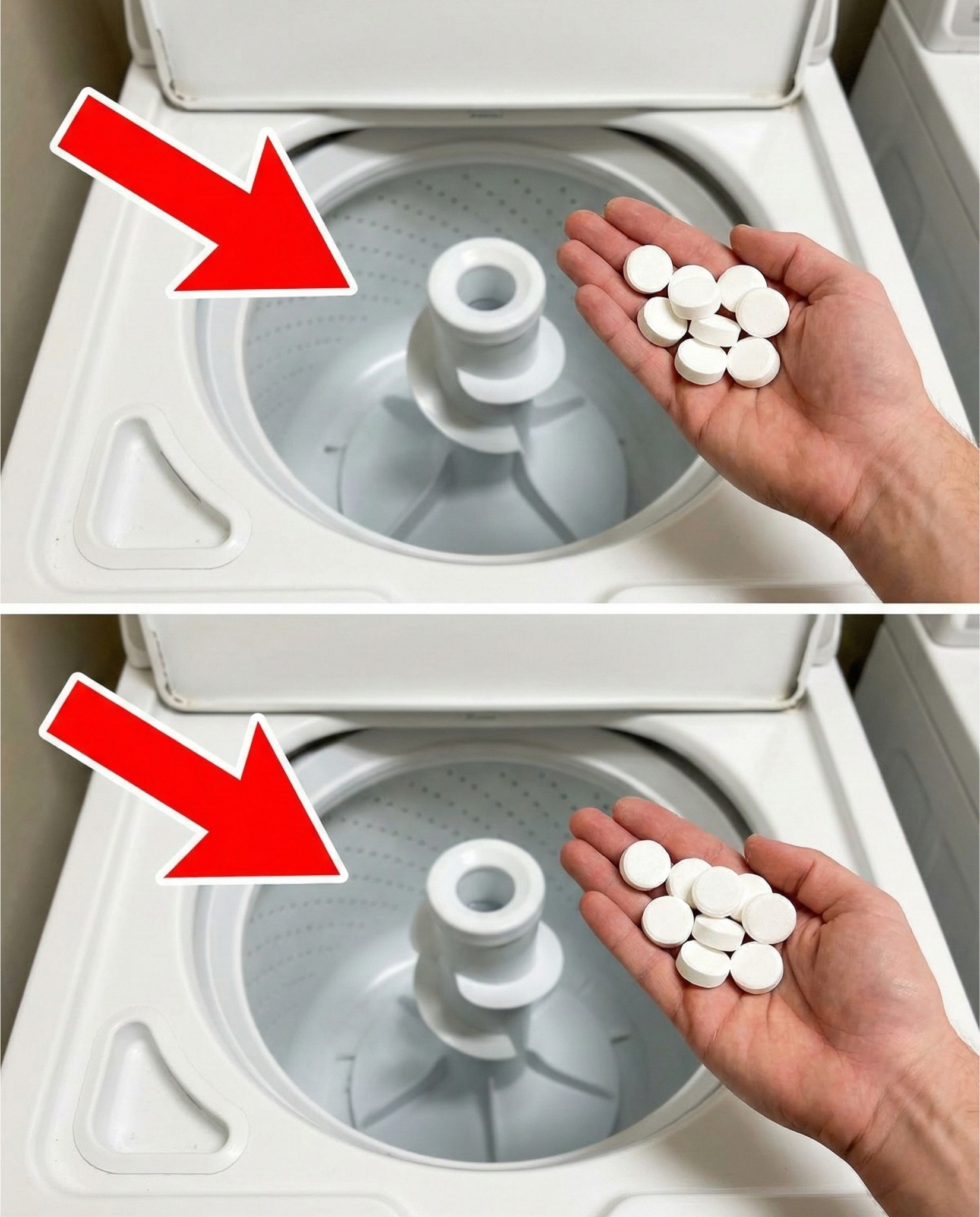
Does Adding Aspirin to Your Laundry Really Work …The Truth Behind the Old-School Cleaning Hack
For decades, a curious piece of household wisdom has circulated among frugal homemakers and vintage laundry enthusiasts: “Add aspirin to your wash to whiten clothes, lift stains, and revive dull fabrics.” It sounds almost too simple to be true, but the tip has persisted across generations.
So, what’s really going on—and does it actually work?
What Aspirin Is Supposed to Do in the Wash
Supporters of this method claim that aspirin can:
- Brighten yellowed whites, especially collars, cuffs, and vintage linens
- Loosen sweat, deodorant, and body oil stains
- Revive faded or tired-looking fabrics
- Serve as a gentler alternative to harsh bleach
The reasoning is that aspirin contains acetylsalicylic acid, a mild acid that can help break down residue and subtly brighten textiles. In theory, it acts like a gentle chemical exfoliant for your clothes.
What Science Actually Says
While aspirin does contain salicylic acid, its laundry powers are limited:
- Water temperature matters: It only works properly in warm or hot water, where tablets fully dissolve.
- Quantity required: Typically 4–6 crushed tablets per load are needed—less cost-effective than baking soda, vinegar, or oxygen bleach.
- Limitations on stains: Aspirin won’t disinfect or remove heavy, set-in stains like grease, wine, or blood.
- Whitening effectiveness: Oxygen-based bleach products generally outperform aspirin for brightening whites.
Despite these limitations, many people still swear by the method for delicate or sentimental items, like vintage blouses, christening gowns, or sweat-soaked workout clothes.
