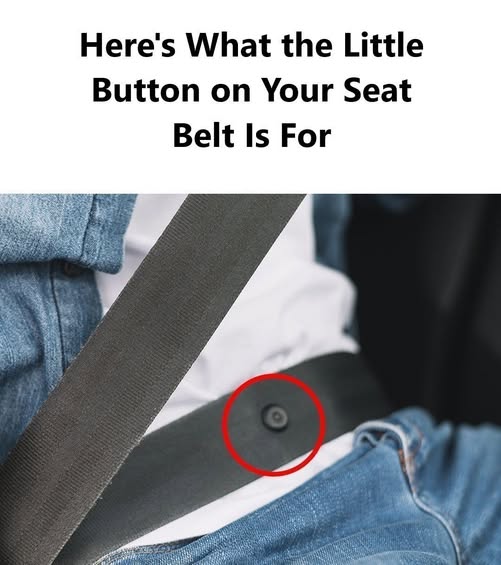
The Tiny Seat Belt Detail You’ve Probably Never Noticed …But Use Every Day
When you hop into your car and click your seat belt into place, chances are you don’t think twice about how it’s designed. It’s just there—reliable, familiar, and easy to use. But next time you buckle up, take a closer look. Have you ever noticed the small plastic or metal button sitting a few inches above the buckle?
It’s not decorative. It’s not random. And once you understand what it’s for, you’ll realize just how clever this tiny feature really is.
Meet the Seat Belt Stopper Button
That little button is officially called a seat belt stopper button (also known as a retaining button). It’s usually made of durable plastic or metal and is permanently attached to the seat belt webbing. You’ll find it just above the latch plate—the metal tongue that clicks into the buckle.
At first glance, it might seem insignificant. But this small detail plays an important role in making your seat belt easier—and more comfortable—to use every day.
Why It’s There: Convenience Matters
The stopper button’s main job is simple but essential: it prevents the latch plate from sliding all the way down to the floor when the seat belt isn’t in use.
Without it, the metal tongue would slide freely down the belt every time it retracts. That would mean fishing around near the seat or floor each time you want to buckle up—hardly convenient, especially when you’re in a hurry. By keeping the latch plate at a reachable height, the stopper button ensures you can grab your seat belt quickly and easily with one hand.
A Small Feature with a Safety Impact
While the stopper button doesn’t directly protect you during a crash, it indirectly supports safety by encouraging proper seat belt use. When buckling up is quick and hassle-free, people are more likely to do it correctly and consistently.
This is especially helpful for elderly passengers, children, or anyone who may struggle to reach a seat belt that’s slipped too far down. In stressful or emergency situations, having the latch plate right where you expect it can make a real difference.
