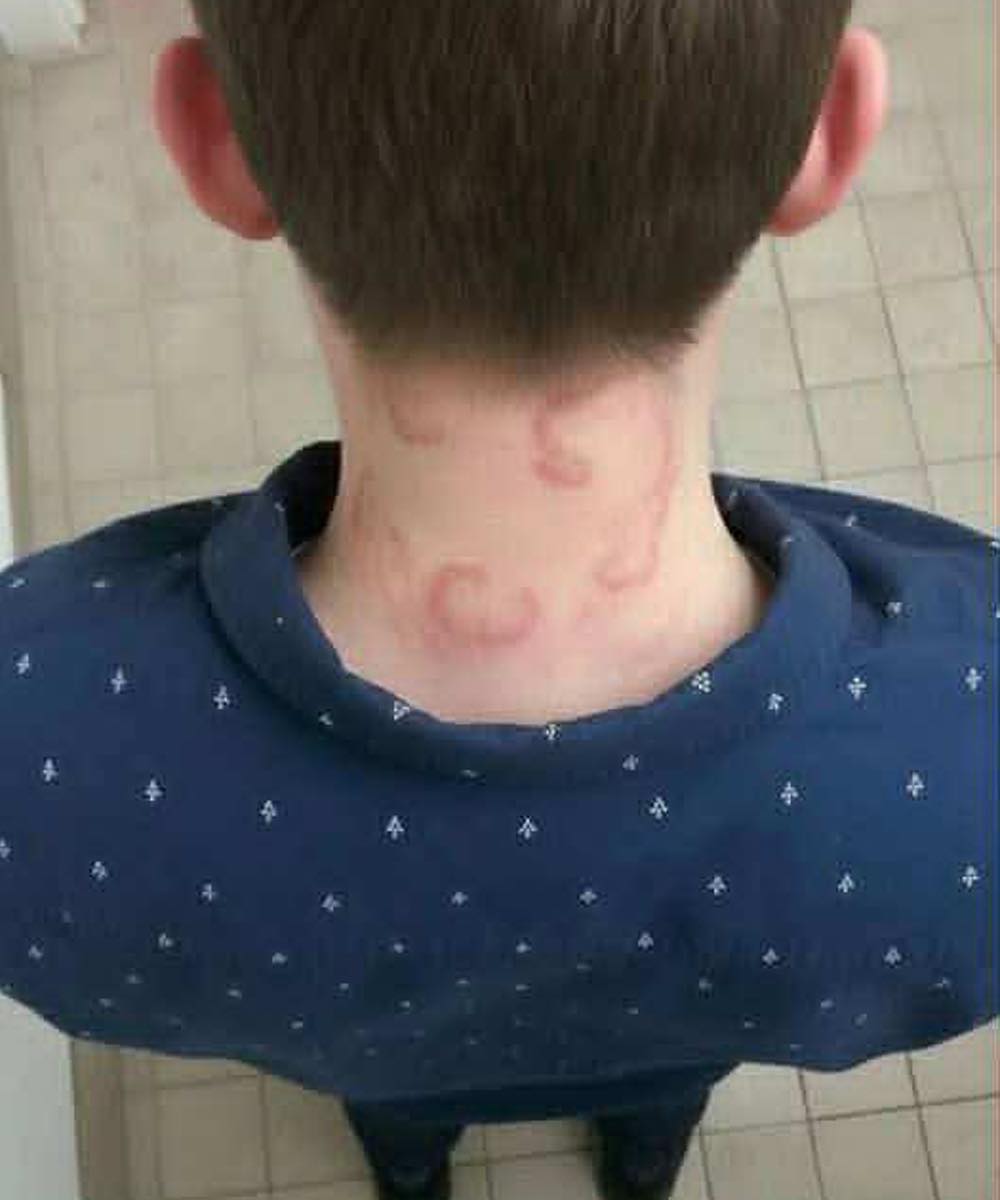
Urticaria is a common skin disorder that affects about one in five people at some point in their lives. It causes intensely itchy, raised areas on the skin called weals or hives, which can be circular or ring-shaped and may merge into larger patches.
These marks often appear after scratching and can develop anywhere on the body.
Urticaria occurs when mast cells in the body release histamine and other chemical substances into the bloodstream. This triggers fluid to leak from tiny blood vessels in the skin, leading to the formation of welts.

Although individual hives typically fade within 24 hours, the overall condition may persist and require ongoing treatment.
The condition is often accompanied by deeper swelling beneath the skin known as angioedema. This swelling commonly affects softer areas such as the lips, eyelids, or the inside of the mouth.
Unlike hives, angioedema tends to be more painful than itchy and usually takes longer to subside.
If angioedema occurs without hives, it may indicate a hereditary condition called hereditary angioedema. This form is not linked to urticaria and requires different diagnostic tests, including blood work, as well as specialized treatment.

Based on its duration, urticaria can be classified into:
Acute Urticaria — which is the most typical type whose reason of outbreaks is usually known. This type lasts for around six weeks.
Chronic Urticaria — when breakouts last longer than six weeks and whose reason of outbreaks is typically unknown.
Physical Urticaria — caused by scratching, exposure to cold, constant pressure on the skin, sunlight exposure, or rise in body temperature.
Common causes are: allergic reactions, infections — both bacterial and viral, and emotional stress.
