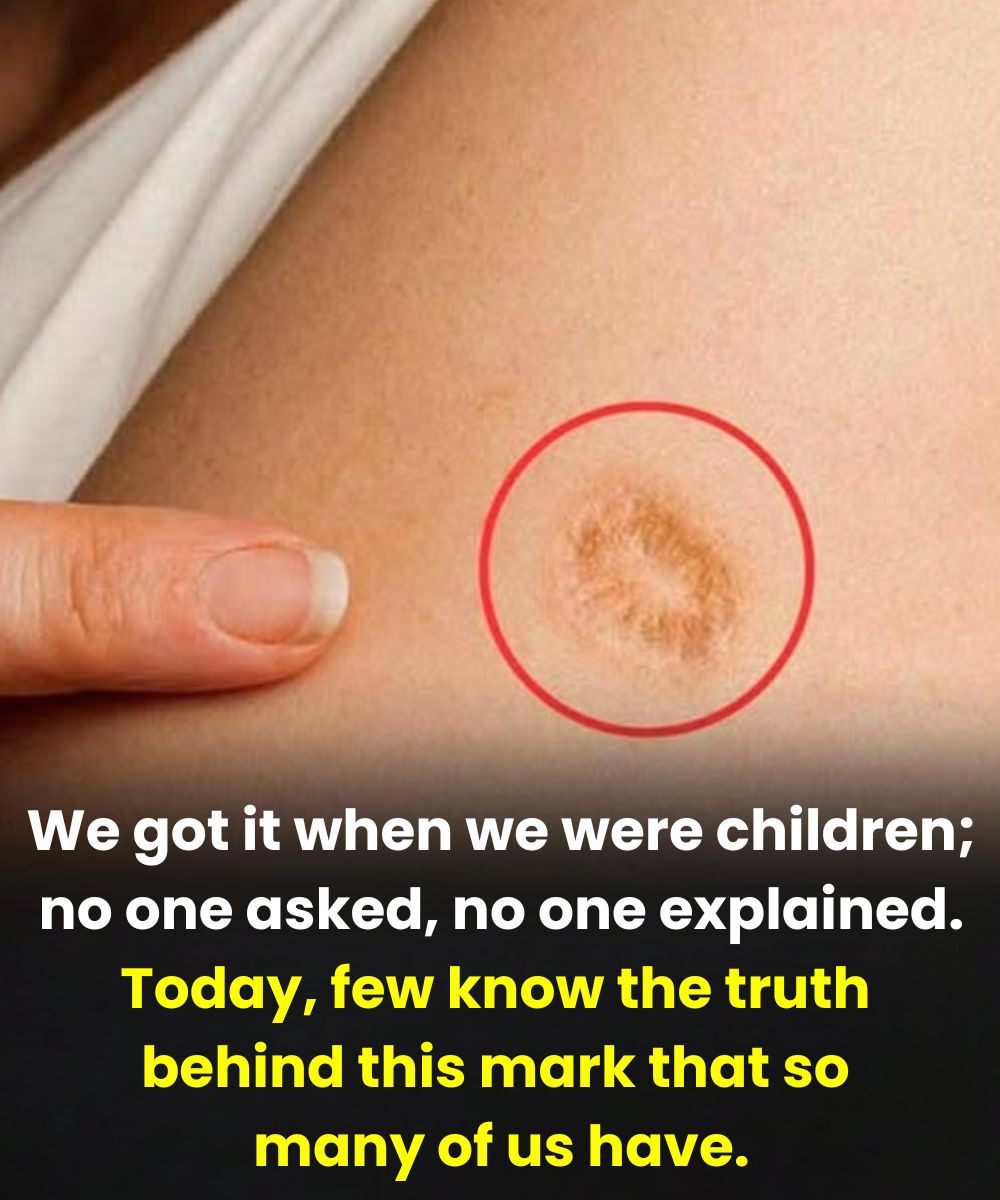
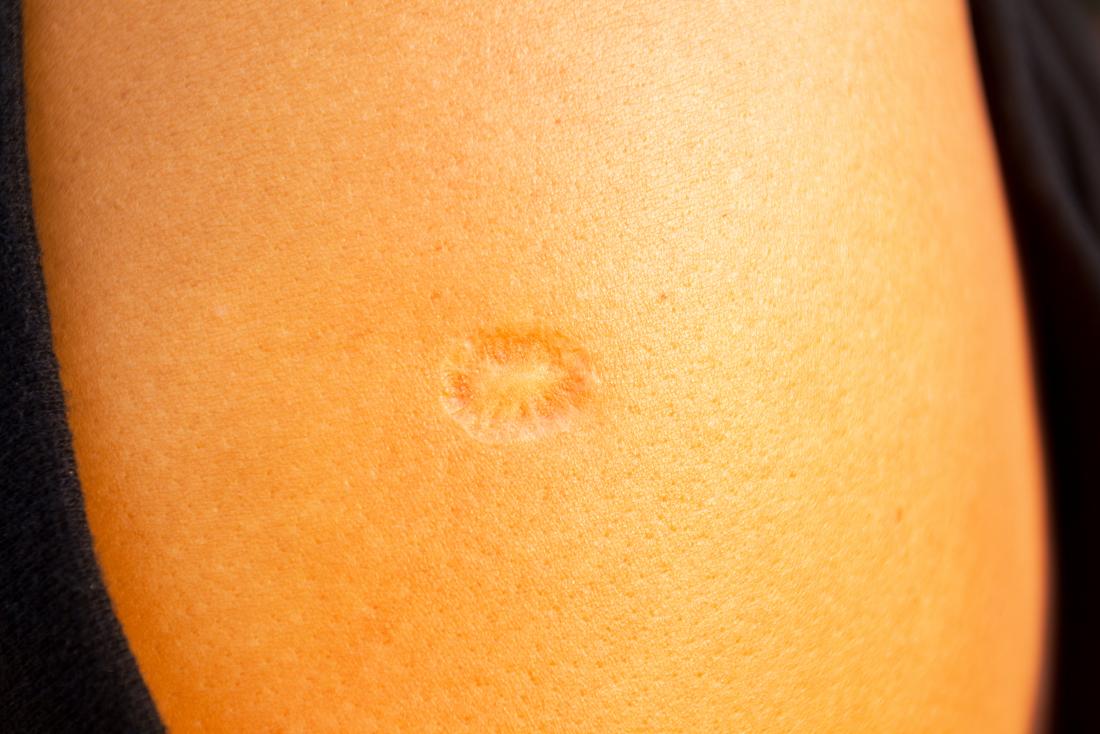
In most cases, the round scar is not caused by a disease or accident. It is the result of the BCG vaccine, which is used to protect against tuberculosis (TB). The vaccine is typically given in infancy or early childhood, which is why most people don’t remember receiving it.
The scar forms as part of the body’s natural immune response, not because something went wrong.
This misconception carries a heavy social stigma. Some people believe the scar is a sign of poverty, poor hygiene, or lack of access to modern healthcare.
The truth:
The BCG vaccine was—and still is—part of national immunization programs in many countries, regardless of income level. Millions of children from all social classes received it, especially in regions where tuberculosis was once widespread.
Having the scar says nothing about a person’s background, education, or social status. It reflects public health policy, not personal circumstances.
Many people compare arms with friends or family and assume that the presence or absence of the scar proves whether someone was vaccinated.
The truth:
Not everyone who receives the BCG vaccine develops a visible scar. Some people heal with little or no mark at all. Others may have had the scar fade significantly over time.
The absence of a scar does not automatically mean a person was never vaccinated, just as having a scar doesn’t indicate stronger or weaker immunity.
Another fear is that the scar signals long-term harm to the immune system or ongoing vulnerability to illness.
The truth:
